The AI-Native Facility Challenge
The Sponic Gardens vision — an AI-native, indoor-outdoor warehouse-greenhouse hybrid — requires a location that transcends traditional commercial real estate. The proposed facility is a "living lab" where physical infrastructure is inextricably linked to an autonomous operating system, necessitating a site that can accommodate high-density sensor arrays, thermal complexes, and community-centric zones while maintaining deep proximity to natural ecosystems.
Three-Layer Intelligence Model
Sensor Layer: Pervasive mesh of Zigbee/ESP32 stacks (Phase 1: temp, humidity, soil moisture; Phase 2: multispectral cameras, VOC sensors, water flow; Phase 3: full mesh with granular energy sub-metering and per-plunge water quality).
Sonic Vision Technology
Sound wave technology to monitor plant health and structural integrity. The site must facilitate integration of acoustic arrays across growing zones for real-time botanical diagnostics.
Functional Zoning Requirements
The chosen site must accommodate a diverse array of functional zones, each with unique technical requirements:
| Zone | Primary Infrastructure | AI Actuation Requirements |
|---|---|---|
| Growing Zones | Hydroponic bays, vertical gardens, greenhouse cultivation | Nutrient dosing, spectral lighting adjustment, irrigation flow |
| Thermal Complex | Saunas (2), steam room, cold plunges (2), hot tub, cool pool | Temperature regulation, water filtration, humidity control |
| Fitness Wing | 30-person hot yoga and dance studios | HVAC ventilation, circadian mood lighting, audio-level monitoring |
| Maker Space | 3D printers (FDM/Resin), CNC routers, design workstations | Energy load balancing, dust/VOC extraction monitoring |
| Food Hall | Vendor stations, communal dining, terrace areas | Digital billing integration, occupancy heatmapping |
Location & Partnership Analysis
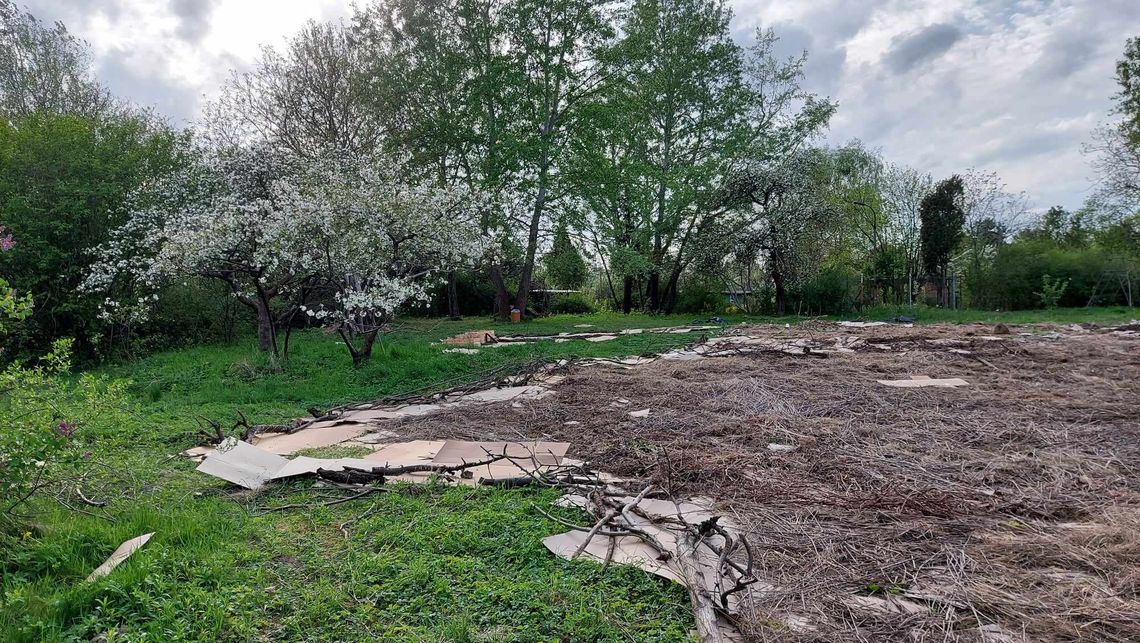
Siekierki, Warsaw · ul. Gwintowa 2
A 3.6-hectare regenerative urban farm integrating food production with social entrepreneurship and community workshops. Recognized as a "Food Lab" with an edible forest and planned greenhouse infrastructure. Philosophically aligned with Sponic — the ecosystem itself has a seat on the supervisory board as a "natural person."
Why #1 for Sponic
Build directly on their 3.6 ha land using planned greenhouse infrastructure in exchange for technical expertise. Avoids high capital expenditure while providing a massive "living lab" for agroecological and solarpunk experiments. Already running ethnobotanical projects.
AI Receptiveness Assessment
Very High. MOST already treats the ecosystem as a legal entity and runs a "Food Lab." Their cooperative structure welcomes technology that serves regenerative goals. AI-driven monitoring fits their existing ethos of systems thinking. The Holobiont project signals openness to experimental, cross-disciplinary approaches.

Praga District, Warsaw
A brand-new, 440 sqm column-free event space within a major post-industrial residential development. Industrial brick-and-steel aesthetic ideal for a high-visibility urban flagship. Surrounding complex offers outdoor areas for integrated community gardening. Potential for permanent yoga or dance studio installations.
Best Use Case
Drive membership growth and fitness engagement via a high-visibility "Fitness Wing" and "Food Hall" pilot. Modern infrastructure supports recurring use agreements for a consistent public presence while keeping monthly costs within budget.
AI Receptiveness Assessment
High. New-build commercial property in a gentrifying creative district. The developer and tenant base skew young, tech-forward. AI-driven occupancy heatmapping and digital billing integration would be seen as premium amenities rather than friction.

Wał Miedzeszyński, Warsaw
A 210 sqm new-build facility on the Vistula riverbank, providing a pristine environment for high-ROI sensor testing. Located in a green district known for forest parks. Perfectly sized for a 6-month technical pilot focusing on hardware fabrication and AI OS development.
Best Use Case
Primary server infrastructure for the AI OS and "Maker Space." Nature proximity on the Vistula riverbank enables testing sensor responses to varying riparian microclimates. Ideal for hardware staging and prototyping garden infrastructure like vine trellis brackets.
AI Receptiveness Assessment
Very High. Commercial warehouse rental with no ideological filter — purely transactional. The landlord benefits from a tech tenant willing to sign a 6-month term. Zero friction to installing any AI/sensor infrastructure. The space is a blank canvas.
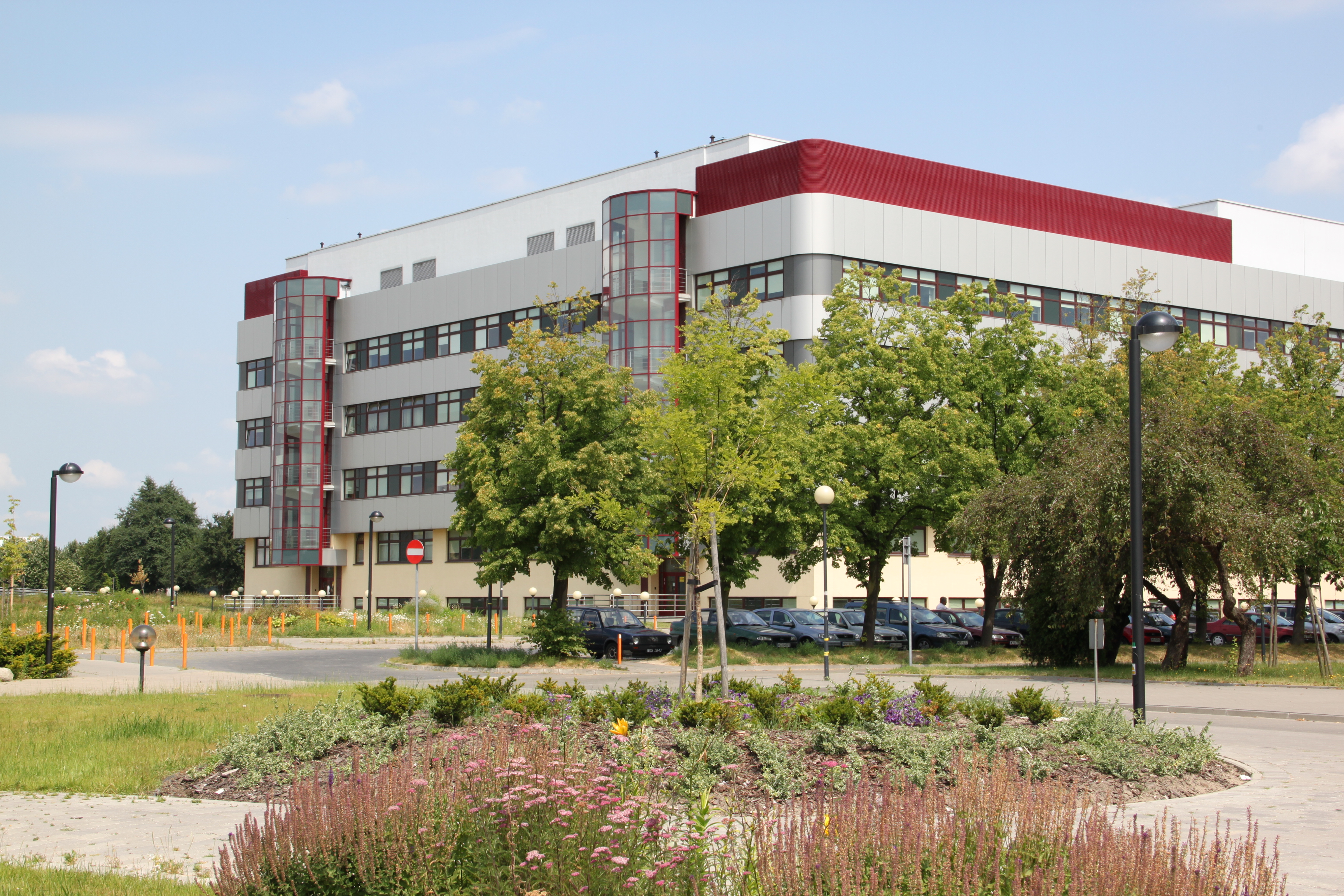
Ursynów, Warsaw · University of Life Sciences
A 70-hectare research campus featuring advanced experimental greenhouses, computer labs, and production halls. Open to commissioned research from business entities. Provides immediate institutional credibility and access to specialized agricultural engineers and scientists.
Best Use Case
Formal scientific validation for Sponic's "Sonic Vision" patents. Commissioned research to refine the AI's botanical actuation logic (spectral lighting, nutrient dosing) under controlled academic conditions with published results.
AI Receptiveness Assessment
High. SGGW already runs precision agriculture research programs. Their greenhouse labs use automated climate control. An AI-native partnership represents a natural extension of their existing research direction — though academic pace may be slower than startup speed.

Grodzisk Mazowiecki (outside Warsaw)
An actual glass-and-wood greenhouse venue on 6,000 sqm of green grounds. Pure botanical aesthetic makes it a premier choice for flagship monthly community retreats and high-end marketing sessions. Accommodates up to 190 guests for "Garden Sessions" or vendor showcases.
Best Use Case
Monthly flagship events: "Garden Sessions," vendor showcases, high-end member gatherings. The botanical glass-house aesthetic photographs beautifully and aligns with Sponic's brand identity for marketing content.
AI Receptiveness Assessment
Moderate. Primarily a wedding and events venue — management optimizes for ambiance and hospitality, not tech infrastructure. AI environmental monitoring would be tolerated as a guest amenity but permanent sensor installations would likely face resistance.
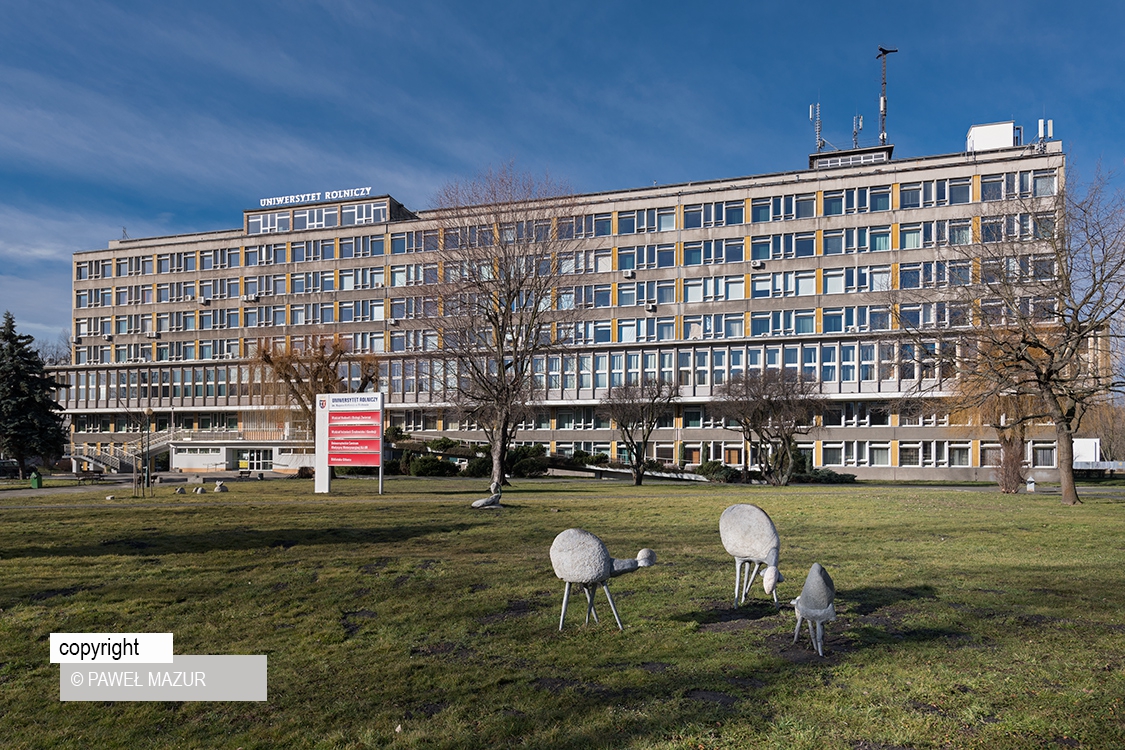
Krakow · University of Agriculture
The primary tech-transfer entity for the University of Agriculture in Krakow, managing 29 experimental stations across 450 hectares. Specializes in precision farming and organic production. Pre-incubator model provides technical conditions for developing agtech startups. Connects Sponic to the "Dragon Valley" tech ecosystem.
Best Use Case
Specialized R&D consortium for precision farming and organic production validation. 29 experimental stations across 450 hectares provides enormous testing diversity. Pre-incubator model is purpose-built for startups like Sponic.
AI Receptiveness Assessment
High. URK actively runs a pre-incubator for agtech. They are accustomed to bridging academic research with commercial applications. Their "Dragon Valley" branding shows they want to attract exactly this kind of technology partnership.

Powsin, Warsaw · Polish Academy of Sciences
A 63-hectare scientific botanical garden featuring massive plant collections, greenhouses, and ponds. Hosts large-scale public events and educational programming. Seeks to expand its educational mission — opening for Sponic to act as a tech-forward extension of existing lectures.
Best Use Case
Sponic-branded educational workshops leveraging PAN's existing audience and scientific credibility. 63 hectares of diverse plant collections offer rich training data for plant-health AI models and acoustic monitoring research.
AI Receptiveness Assessment
Moderate. PAN operates with academic rigor and institutional caution. They'd welcome AI that clearly serves their educational and conservation mission, but may be slower to adopt commercially-oriented tech. Framing AI as a scientific research tool is key.
Marysin Wawerski, Warsaw
A 200 sqm renovated warehouse in a district characterized by forest coverage and parks. Post-renovation with improved insulation — critical for protecting sensitive maker-space electronics during winter. High-character industrial base near semi-natural riparian zones.

Praga District, Warsaw
A stunning 400 sqm heritage event hall featuring exposed brick and 18th-century industrial architecture. Post-industrial courtyard accommodates outdoor botanical elements. A vibrant social hub for the Praga district. Very high brand aesthetic alignment, though permanent technical installations require specific negotiation.
Best Use Case
Secondary event venue and social hub. The heritage aesthetic photographs beautifully and the courtyard enables botanical pop-ups. Good for high-profile launch events and member gatherings.
AI Receptiveness Assessment
Moderate. Heritage venue operators prioritize aesthetic preservation. AI would need to be invisible — ambient sensors rather than visible hardware. Relationship-building matters here more than tech specs.

29+ locations across Warsaw
A city-backed network of 29+ community gardens across Warsaw requiring no initial lease commitment. The lowest-risk option for a "soft launch" — test AI-driven gardening sessions with established community gardener audiences. Builds brand visibility and member data before committing to a permanent flagship.
Best Use Case
Zero-cost community engagement and brand-building. Test Sponic's AI-driven gardening sessions (soil monitoring, planting recommendations) with real gardeners before investing in permanent infrastructure.
AI Receptiveness Assessment
Low-Moderate. Community gardeners tend to be analog-first. AI monitoring may feel intrusive. Best approach: offer AI as an optional "garden helper" app rather than infrastructure — a tool individuals opt into, not a system imposed on shared space.
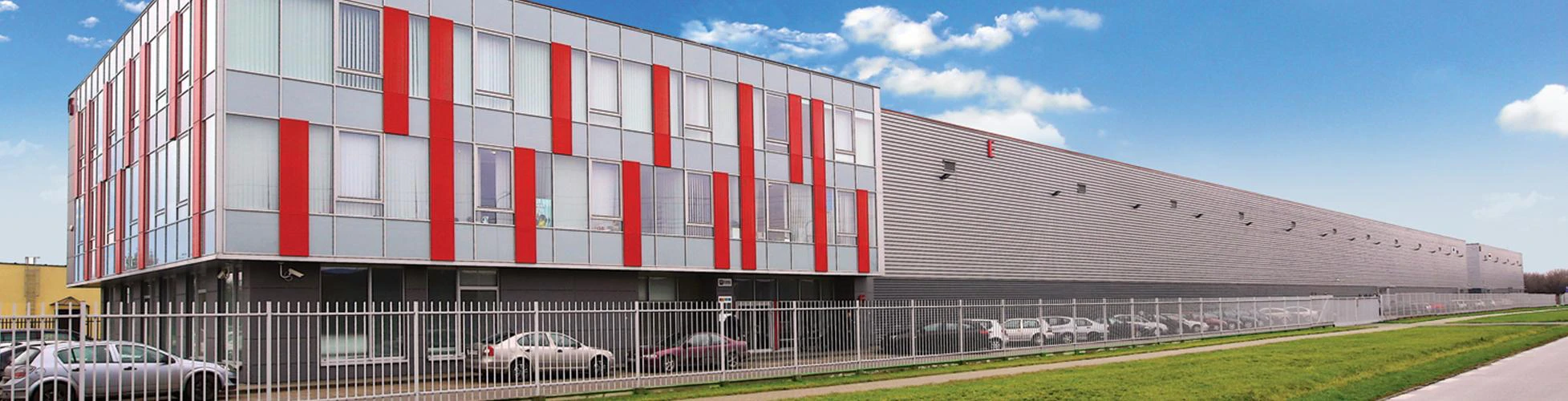
Bialoleka, Warsaw · Annopol 4
A modern Class A logistics and light-production park totaling ~60,000 sqm across six buildings. Modular warehouse units from 600 sqm with attached offices. Industrial zoning makes it straightforward to install growing infrastructure, cold plunge systems, and maker equipment without residential noise complaints. Surrounding area is seeing rapid residential development.
Best Use Case
Full-scale prototype facility with maximum spatial freedom — growing zones, sauna/plunge builds, fitness studio, and maker shop all under one roof with outdoor expansion potential. The only location large enough for the complete Sponic vision in one structure.
AI Receptiveness Assessment
High. SEGRO is a pan-European REIT with smart building systems already deployed across their portfolio. They actively court tech tenants and are receptive to IoT sensor networks and AI-managed climate systems as a differentiator for their park.
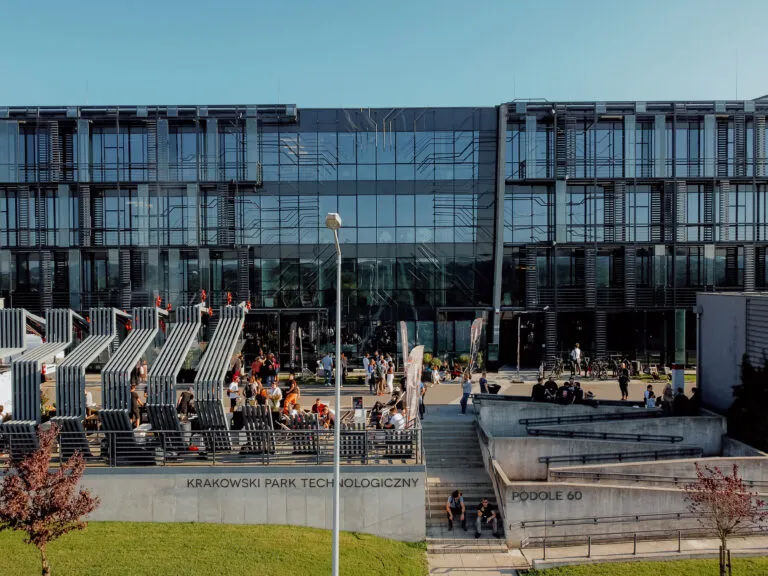
Czyzyny Campus, Krakow
Poland's longest-running tech park (est. 1997), located on the former Krakow-Rakowice-Czyzyny military airfield. Offers certified Living Lab, cloud computing lab, and data center. The surrounding airfield grounds provide rare open-air expansion potential within city limits — perfect for outdoor growing zones and greenhouse prototyping. Industry 4.0 programs and startup incubation at subsidized rates.
Best Use Case
AI-forward R&D hub with growing tech. Leverage KPT's existing Industry 4.0 programs, living lab certification, and startup ecosystem to pilot AI-managed growing systems and sensor networks. Less suited for the full wellness vision, but ideal for the technology spine.
AI Receptiveness Assessment
Very High. KPT's core mission is technology incubation. They run Industry 4.0 programs (hub4industry consortium), have a cloud computing lab, and a certified Living Lab — one of only two in Poland. AI integration would be celebrated, not merely tolerated.

Praga-Polnoc, Warsaw · ul. Zabkowska
A restored 19th-century vodka distillery housing the Google for Startups Campus (the only one in Central/Eastern Europe), the Polish Vodka Museum, a Moxy hotel, food hall, fitness club, and residential apartments. Established footfall and cultural programming (slow fairs, concerts, markets). Flex spaces available for pop-up activations.
Best Use Case
Pop-up Sponic experience or satellite wellness lounge. Test market fit with the existing Koneser audience (startup founders, hotel guests, food tourists) before scaling to a full warehouse build. Google Campus co-location creates natural AI/tech community overlap.
AI Receptiveness Assessment
High. Google for Startups Campus is literally on-site. The developer actively courts tech/innovation tenants. AI-integrated wellness or growing demos would align with the complex's innovation identity.

Kamionek (Praga-Poludnie), Warsaw · ul. Minska
Poland's first self-described "artistic sub-district" on former industrial works. Houses the Neon Museum, art galleries, restaurants, theaters, boutique cinema, and creative studios. Ongoing phased development means new buildings continue to come online. The creative-industries mix closely mirrors Sponic's DNA.
Best Use Case
Embedded Sponic studio within an existing creative ecosystem. A growing wall installation, wellness micro-facility (sauna + plunge), and maker workshop integrated into Soho's cultural programming. Leverages existing foot traffic without needing to build community from scratch.
AI Receptiveness Assessment
Moderate-High. Tenants skew creative/tech — design studios and agencies comfortable with digital tools. AI-integrated art installations (generative growing patterns, sensor-responsive environments) would fit well. Pure ag-tech framing would be less natural here.
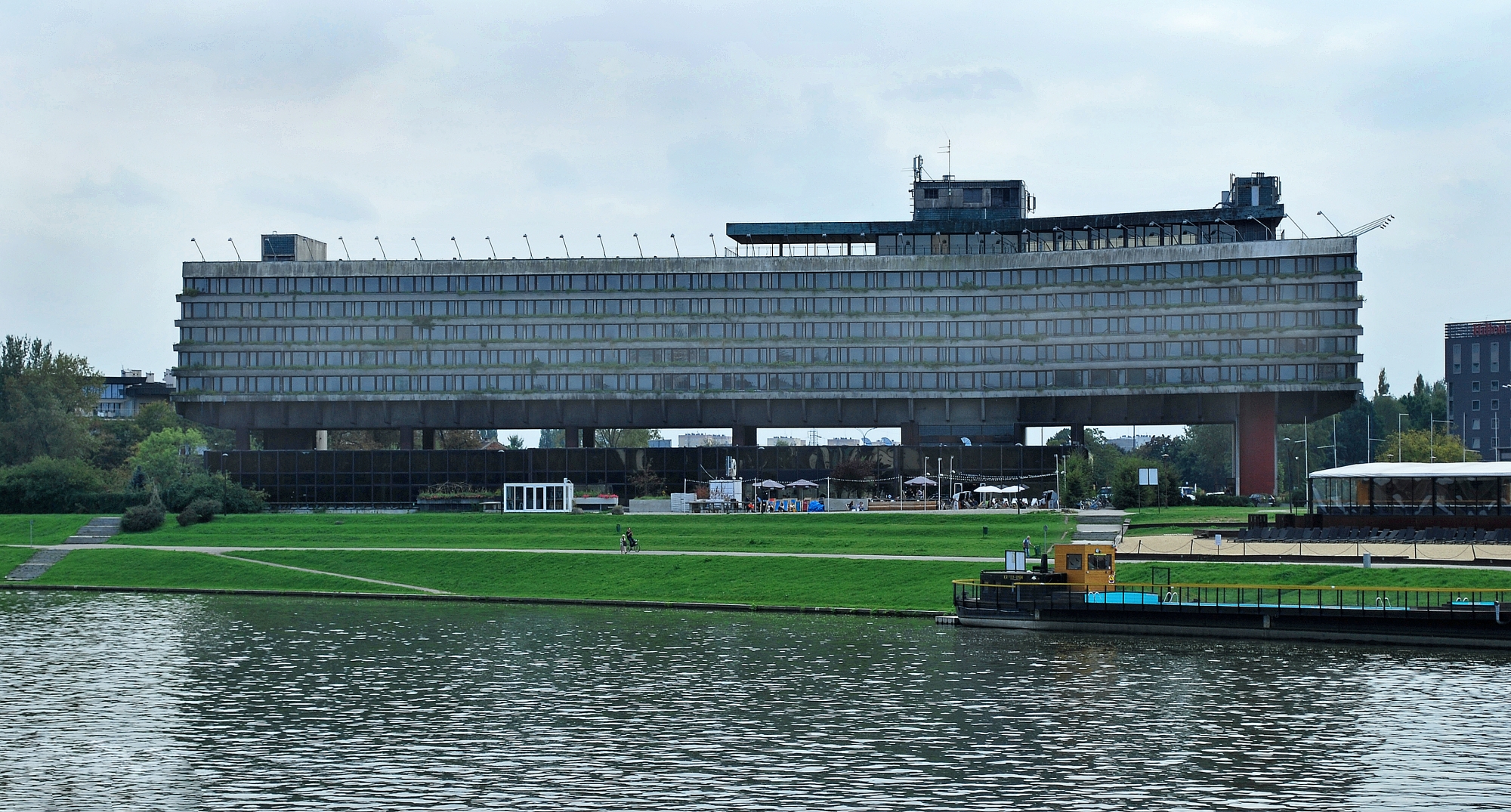
Podgorze, Krakow · ul. Konopnickiej 28
The ground floor and riverside terrace of the brutalist former Hotel Forum (built 1988), repurposed as Krakow's most iconic alternative cultural venue. Massive indoor hall with concrete industrial aesthetic, plus an expansive outdoor terrace with direct Vistula views and Wawel Castle sightlines. Hosts DJ events, design fairs, and food festivals.
Best Use Case
Seasonal Sponic activation — summer outdoor growing installations, cold plunge stations on the riverbank, sauna pop-ups, and food programming integrated with existing festival calendar. The terrace is one of the best outdoor event spaces in Poland.
AI Receptiveness Assessment
Moderate. Operators are culturally progressive and open to experimental installations, but this is an arts/nightlife venue, not a tech hub. AI would need to be framed as art installation or experiential design rather than pure technology. Think "AI-curated growing art" not "smart agriculture dashboard."

Zablocie, Podgorze, Krakow
Post-industrial warehouse buildings in the heart of Krakow's most successful revitalization district. Adjacent to MOCAK (Museum of Contemporary Art in Schindler's Factory), Cluster Zablocie coworking (810 sqm, 112 workstations), and creative studios. Original facades preserved with modern insulation — a template for how Sponic could retrofit industrial bones with growing and wellness infrastructure.
Best Use Case
Full Sponic prototype in Krakow — the warehouse format directly supports growing zones, maker space, and wellness builds. The MOCAK/Schindler cultural ecosystem provides foot traffic and brand alignment. Zablocie's revitalization mandate means municipal support for innovative adaptive reuse.
AI Receptiveness Assessment
Moderate. The innovation cluster has tech tenants and attracts creative-tech workers, but the primary identity is arts/culture. Krakow's strong university ecosystem (Jagiellonian, AGH) means recruiting AI talent is feasible. Municipal revitalization programs may offer grants for smart-building tech.
Multi-Node Strategy
A multi-nodal approach — combining community farms, urban flagship halls, and technical bases — ensures Sponic Gardens will be a fully functional, AI-governed ecosystem by July 2026.
MOST Cooperative — The "Siekierki" Anchor
Build directly on their 3.6-hectare riparian forest site. Exchange technical expertise for land access and greenhouse infrastructure. Avoids high capex while providing a massive "living lab" for agroecological and solarpunk experiments.
BOHEMA 2.8 — The "Community" Hub
440 sqm column-free space in Praga for the "Fitness Wing" and "Food Hall" pilot. Metro-accessible location drives membership growth. Recurring use agreement keeps costs within the $12,000/month budget ceiling.
New Warehouse Wawer — The "Maker" Base
Controlled indoor environment for the Maker Space and primary AI OS server infrastructure. Vistula riverbank location enables sensor testing against varying riparian microclimates. $3,317/month for 210 sqm.
URK / SGGW Collaboration
Academic partnerships to refine the AI's botanical actuation logic (spectral lighting, nutrient dosing). Commissioned research provides formal scientific validation for the Sponic "Sonic Vision" patents under expert guidance.
Pilot Budget Allocation — $250,000 / 6 Months
The majority of resources are directed toward technical innovation rather than fixed lease costs.
Phase 1-3 sensor mesh, smart LED arrays, server infrastructure
Wawer ($19.9K), BOHEMA ($30K), MOST contributions ($10.1K)
Modular sauna units, cold plunge tanks, studio AV equipment
SGGW or URK commissioned research, university-guided scenarios
Community workshops, ethnobotanical projects, vendor recruitment
Timeline Target
This multi-nodal approach ensures a fully functional, AI-governed ecosystem that redefines the relationship between urban citizens and the botanical world by July 2026. The pilot budget of $250,000 covers six months of operations across all nodes.